By Kristine Johnson
Imagine a native plant garden. What do you see? Most of us picture colorful and attractive flowers, mostly of a certain shape and a certain height, but growing native plants is so much more than that. This article will encourage you to think a little outside the box to consider different types of flowers, varied forms of plants, and perhaps functions that you’ve not yet focused on.
Many garden certification programs other than our own Wild Ones program require gardeners to include native plants of different forms (trees, shrubs, grasses, succulents, vines, and so on), because research shows that these varied lifestyles of plants serve a wider variety of pollinators, birds and other wildlife than herbaceous flowering plants alone. (Consider checking out the Xerces Assessment Guide for Pollinator Habitat in Yards; also check out the Audubon Habitat Hero Program.
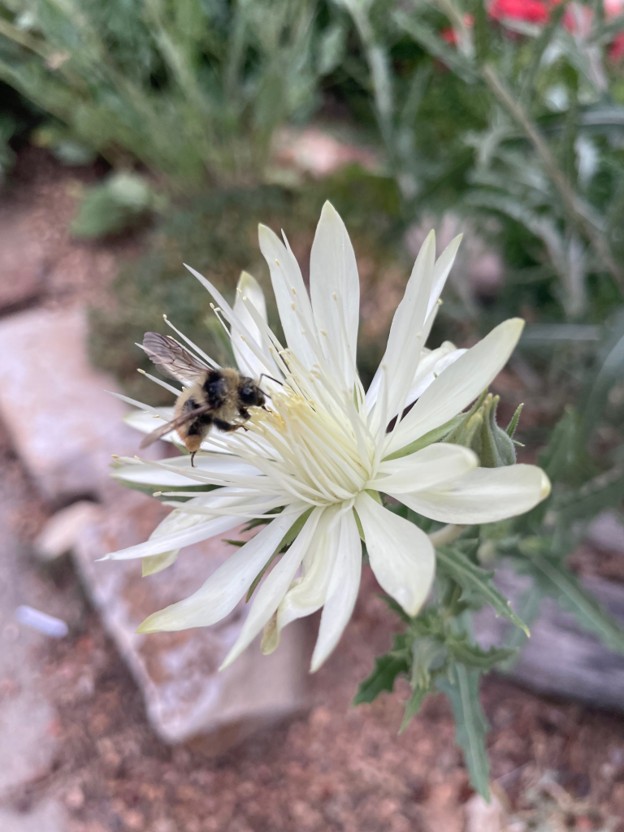
The same goes with flower type and shape: the timing, shape, size, color, and arrangement of flowers and seeds impacts the native fauna who use them. Generally, the more diversity in these factors, the better. Last but not least, while it’s good to include familiar plants, we can also make new ones!
Trees and Shrubs
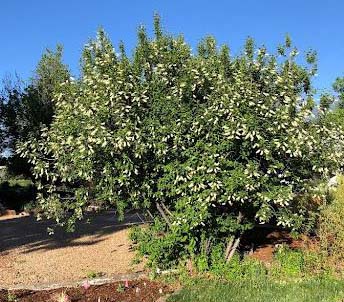
Did you know that trees, even those that are wind-pollinated, provide a critical source of pollen for our earliest emerging native bees? Also consider perusing plant lists at Xerces, the NWF, and Audubon to find impactful trees and shrubs for your area. Evergreen trees and shrubs provide crucial food for many types of birds. For example, Townsend’s solitaires are particularly reliant on junipers for food, as well as for cover and space for nesting. Many of the genera and species on the National Wildlife Federation (NWF) Keystone Plant lists (see above) – which includes especially impactful native host plants for bees, butterflies and moths – are trees and shrubs. Think native oaks, native plums, chokecherries, cottonwoods, our native alder, birches, hazel, box elder, native willows, rabbitbrush and native evergreens.
Grasses
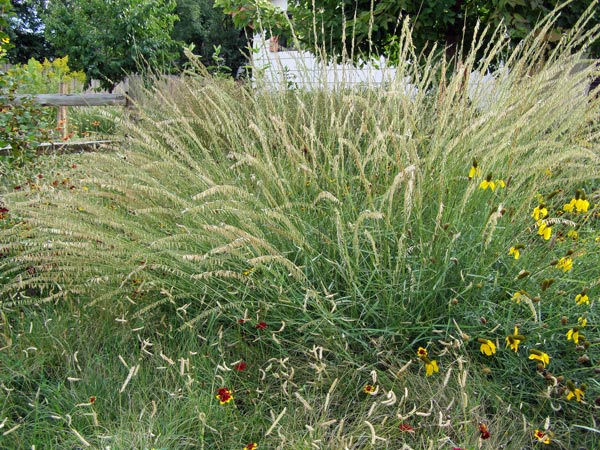
Did you know that many of our native grasses are host plants for many species of skippers and other butterflies and moths? (See the butterfly/moth list and the at-risk list.) Many native grasses show up as important sources of food for seed-eating birds. (See this link for examples. Grasses can also serve as living mulch and fill out your garden, reducing weed pressure and conserving water. Lower profile grasses such as blue grama grass, buffalo grass, Arizona fescue and Idaho fescue are especially good at this.
Annuals and Short-Lived Perennials
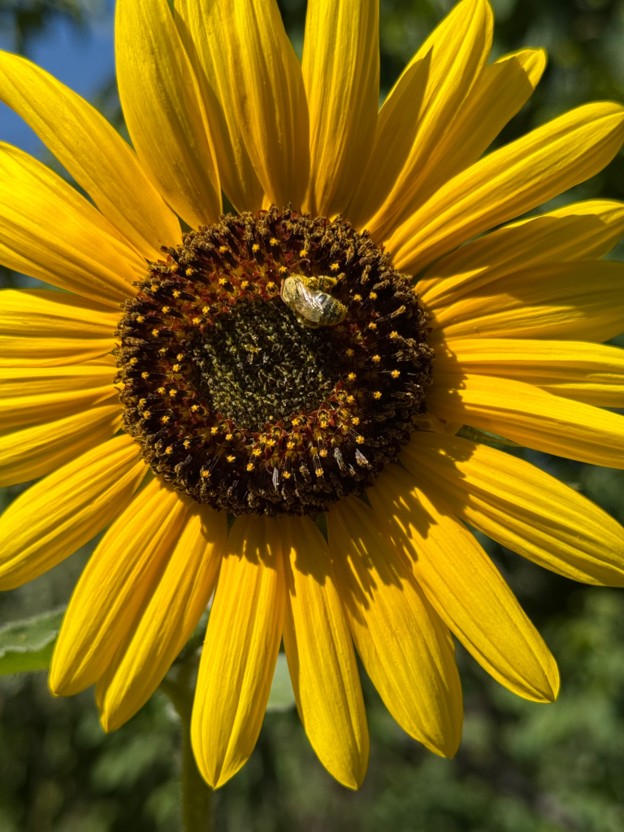
A lot of us focus on perennial flowers because they perform and they reliably come back year after year in the same locations. But some annuals and short-lived perennials have outsized impacts. In my own yard, the broadest diversity of insects is found on annual sunflowers (Helianthus anuus) and beeplant. (Cleomella serrulata). A Boulder Wild Ones Front Range (WOFR) member loves her Mentzelia species, many of which are considered biennials or short-lived perennials; she says she has learned to live with how they “move around” (by self-seeding), but that the hummingbirds and hawkmoths are worth it. Others to consider include cowpen daisy (Verbesina encelioides) and golden tickseed (Coreopsis tinctoria), both of which are NWF Keystone plants.
Plants that Flower in Spikes or with Odd Shapes
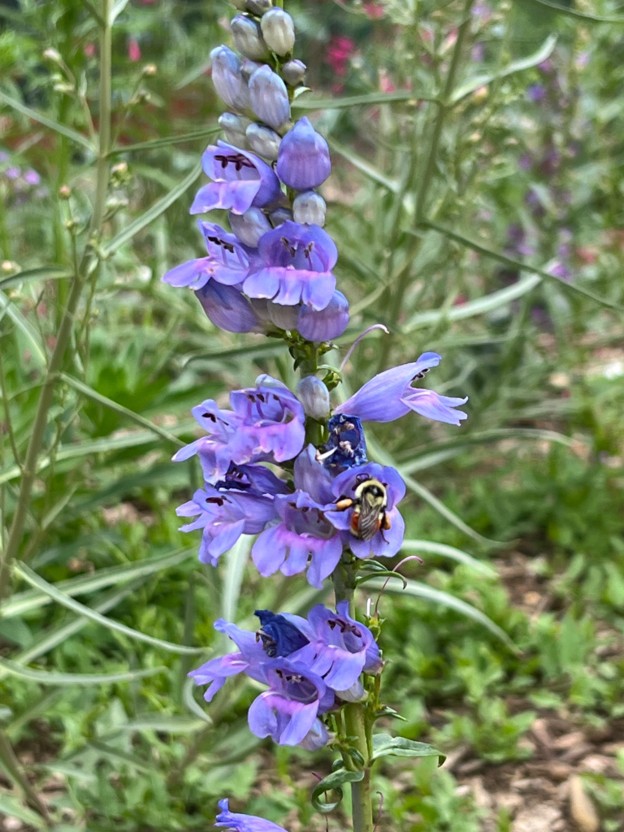
Did you know that members of the pea family, such as goldenbanner (Thermopsis spp.), are especially important to bumblebees? Have you seen that bumblebees and hummingbirds both love tubular flowers, such as penstemons? Have you noticed that blue verbena (Verbena hastata), gayfeather (Liatris spp.), and ironweed (Vernonia spp.) all look kind of weird or different but attract so many insects? Consider growing these unique plants.
Vines
I love all (or most?) native vines in Colorado. The diversity of pollinators and other insects on the native clematis (Clematis ligusticifolia), the fragrance of our native hops (Humulus neomexicana) its support of the rare and endangered hops blue butterfly, and the taste of our native grapes (Vitis riparia). Consider that vines might be something to try as a groundcover or something to grow on a fence or improvised trellis to screen a view or to provide summer shade.
Native Asters
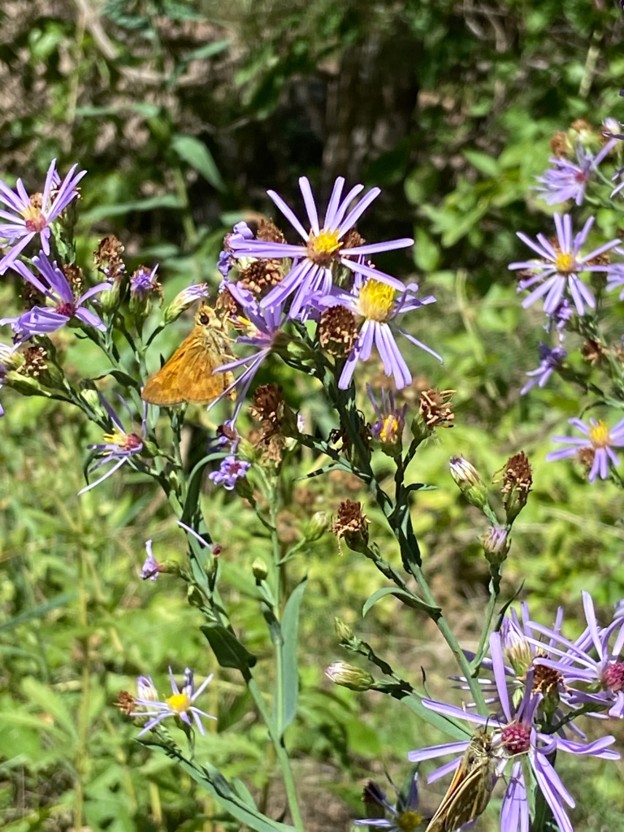
I mention native asters (Symphiotrichum spp) for two primary reasons. First, they are so impactful in terms of pollinator support late in the growing season (see the plant lists above), and second, there are so many non-native asters on sale at big box stores come August. I urge you to skip the big box version, which is likely full of neonicotinoids and not safe for your garden and more or less a disposable ornament. Consider topping off the last of the butterflies, moths, and bees with the wide variety of native asters instead.
Native Fleabanes
Native fleabanes (Erigeron spp.) are generally at the other end of the flowering season, in spring, and they may be overlooked because the plants and flowers generally can be small (though Erigeron speciosus is probably the showiest of the bunch). Once again, these are keystone plants (see lists provided above) and support an outsized number of pollinators. In addition, as I hiked around drought-stricken Boulder County this spring and early summer, I noted that when nothing else had been blooming, fleabanes were. I encourage you to plant them.
Senecio spp. and Packera spp.
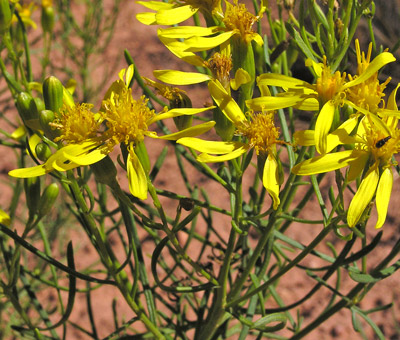
Also known as ragworts and groundsels. This used to be one genus of flowering plants, with branched clusters of daisy-like flowers, generally yellow. Again, they punch above their weight class, with the genera listed as keystone plants. (Consult the lists provided above.) These diverse genera include members that grow in relatively dry shade, in open meadows and more. Why don’t we grow them and plant them more often?
Super Tall Flowering Plants
It feels like there is a rule that we only grow disc-shaped flowers and that they should max out at 18 to 24 inches. But, have you seen chickadees and goldfinches hanging off a monumental maximilian sunflower? Have you smelled a Palmer’s penstemon, which reaches 6 feet in height when we have a wet winter? Have you seen the 12-foot tall compass plants at Denver Botanic Gardens at Chatfield and wanted one of your own? While some of us have small garden spaces, herbaceous flowering plants that get large have their place. Use them as accents, next to fences or walls, behind and setting off shorter plants, which may fade sooner.
Bonus round:
- Net-leaf hackberry (Celtis reticulata): attractive drought tolerant tree that is a superstar for birds.
- Things that are next to impossible to find: native hawthorns (Crataegus spp.), native snakeweed (Gutierrezia spp.), native honeysuckle (Lonicera involucrata), native hazelnut (Corylus cornuta) (the latter two are good for raingardens).
- Prickly things: who’s afraid of cacti? Cold-hardy native cacti are easy to grow and propagate, particularly prickly pear and chollas (Opuntia spp. and Cylindropuntia spp.). They attract special groups of native bees, they work in hot dry locations with little water, and they have beautiful flowers.
Kristine Johnson is a Wild Ones Front Range Board member and one of the regional coordinators for the Boulder County+ Region.