
By Deborah Lebow Aal*
I bet you’ve made some design mistakes with your native plants. I certainly have. I’ve put a red flower next to another clashing red flower, a tall flower in front of a short, and much worse. So silly. So, I asked a few very active Wild Ones Front Range Chapter folks what their favorite native plant combinations are, and boy, did I get lots of responses. It seems this is a topic on which many have an opinion.
So, I’m sharing their responses here. Some are simple, some are complicated. I won’t name names, but some of these folks are famous (at least in our circles) landscapers! When it’s a direct quote from someone, I’ve put quotation marks around it.
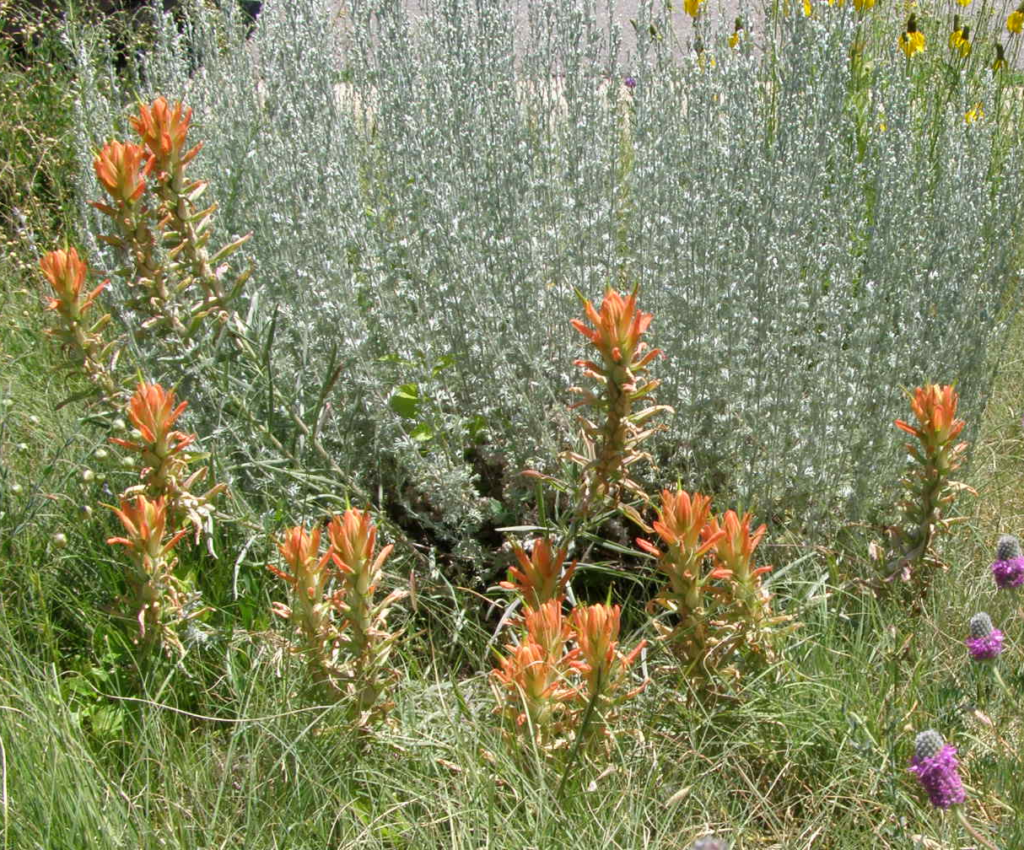
- Artemisia frigida (fringed sage) and Castillega integra (indian paintbrush). This is a classic combination, as indian paintbrush is hemiparasitic, meaning it attaches to the roots of host plants to siphon nutrients. I think paintbrush also looks good and survives with many native grasses.
- Eriogonum umbellatum (sulphur flower) and Glandularia binnatifida (prairie verbena)
- Eriogonum umbellatum (sulphur flower) and Oenothera caespitosa (tufted evening primrose)
- Ratibida columnifera (mexican hat) and Coreopsis lanceolata (lanceleaf coreopsis): This is a lovely combination but beware of lanceleaf coreopsis – my experience is that it spreads rapaciously! If that’s what you want, great!
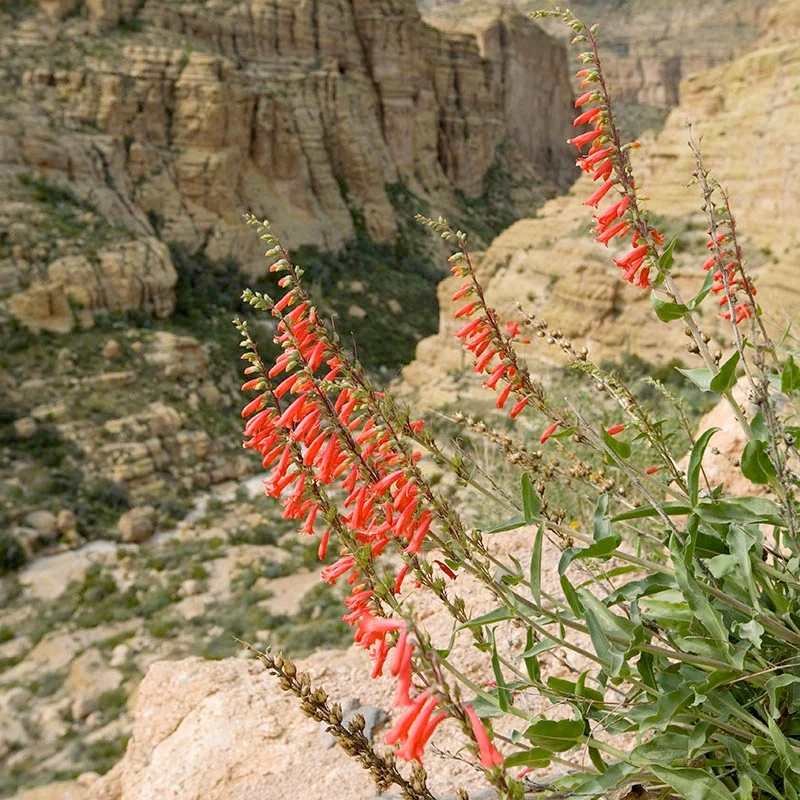
- Penstemon eatonii (firecracker penstemon) and Berlandia lyrata (chocolate flower)
- Penstemon eatonii (firecracker penstemon) and Penstemon strictus (Rocky Mountain penstemon)
- Penstemon strictus (Rocky Mountain penstemon) and Linum lewisii (wild blue flax): (This one is interesting as it is a blue and purple together, but yes, it works!)
- Linum lewisii (wild blue flax) and Penstemon pinifolius (pineleaf penstemon)
- Anaphalis margaritacea (pearly everlasting) and Asclepias tuberosa (butterfly weed)
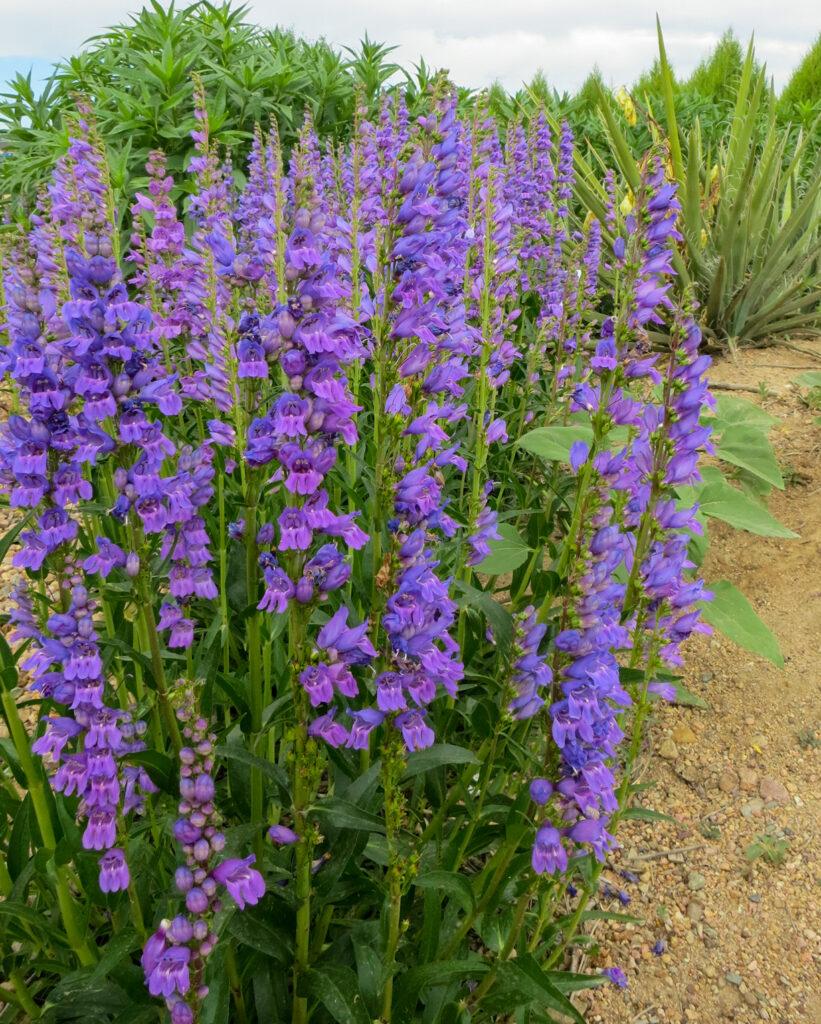
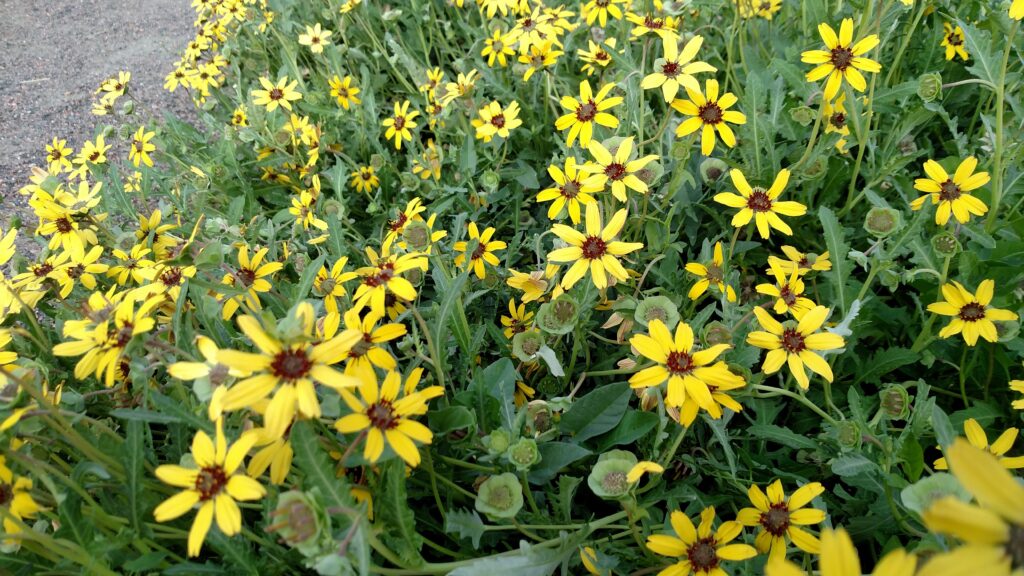
“I do love the classic Colorado purple/blue and yellow contrast, so a mix like this makes me very happy:
- Machaeranthera bigelovii (Bigelow’s tansyaster)
- Linum lewisii (blue flax)
- Salvia azurea var. grandiflora (giant blue sage / blue pitcher sage)
- Liatris punctata (dotted blazing star)
- Ratibida columnifera (prairie coneflower/Mexican hat)
- Solidago rigida (stiff goldenrod)
- Berlandiera lyrata (chocolate flower)
- Artemisia frigida (fringed sage)
This combo gives that beautiful blue/purple plus yellow palette and also provides a long bloom window for pollinators. And this doesn’t even cover the shrubs and grasses!”
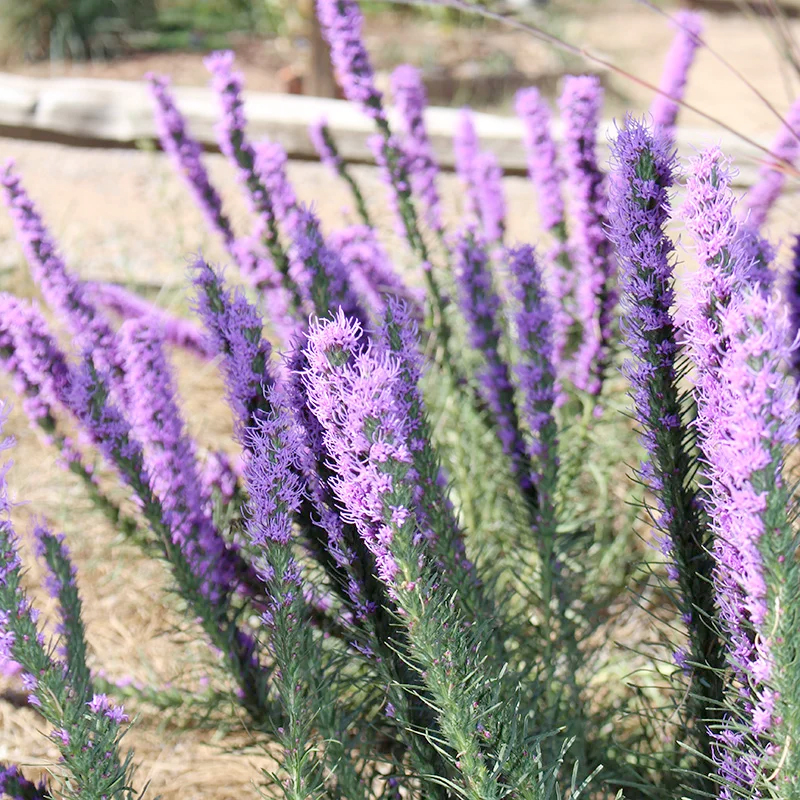
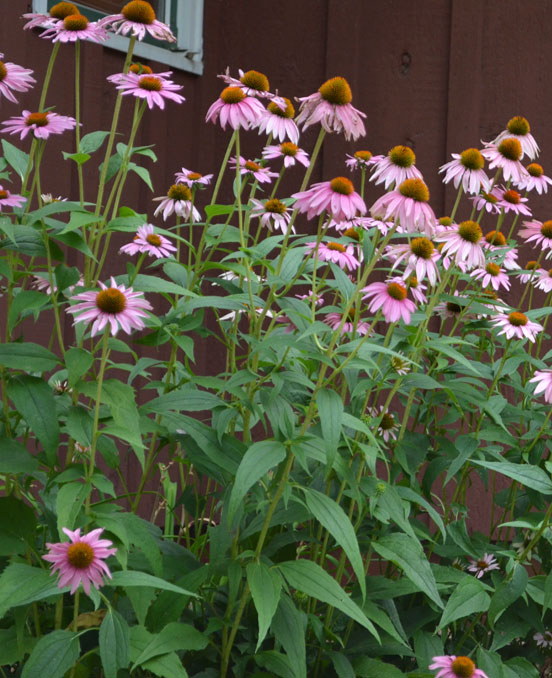
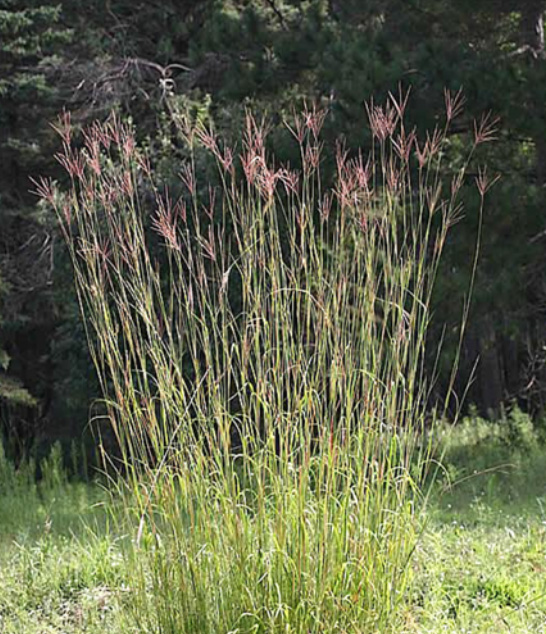
“Here’s what I’m liking these days – attempting a Piet Oudolf style with a constrained color pallet and mass plantings:
- Swaths of Andropogon gerardii, (big bluestem) for movement and fall color (if it’s a big enough space as they can take over).
- Swaths of Schizachryium scoparium (little bluestem), for movement and fall color
- Tons of Bouteloua gracilis (blue grama grass) as matrix filler, like a river, throughout, and for fall seed heads
- Tons of Allium cernuum (nodding onion), for mass planting in swaths or big clumps, for front of border interest and summer lilac flower clusters
- Clumps of Echinacea pallida (purple coneflower) massed in between the taller and shorter grasses to add lavender flower heads in summer and punctuating black seed heads all winter
- Liatris pycnostachya (prairie blazing star), as vertical interest with lavender flower stalks for summer interest in a few places in and among the grasses, which give it a little shade
- Just a few of the Eryngium yuccifolium (rattlesname master) for the surprising 4′ tall white flower capsules in summer that persist as seed heads throughout the winter
I have really enjoyed the idea of having a combo of grasses and flora popping up through the grass “meadow!” Now that the corner of our property is nicely established with a Bouteloua gracilis (blue grama)/Bouteloua dactyloides (Buffalo grass) mix, I have enjoyed seeing various Helianthus species popping up. As I continue to direct sow more vertical flora seed, I’m hoping to see more of that grass/flora combo pop up!”
This commenter gave names to his combinations:
- “Landscapey: Nolina greenei (Woodland beargrass), Zinnia grandiflora (Prairie zinnia) and Liatris punctata (Dotted blazing star)
- Big Forby: Silphium terebinthinaceum (Prairie dock)/laciniatum (Compass plant, extirpated from Colorado!) plus Sporobolus airoides (Alkali sacaton) plus Desmanthus illinoensis (Prairie mimosa or Illinois bundleflower)
- Xeric/winter: Oryzopsis hymenoides (Indian ricegrass) plus Gutirrezia sarothrae (Broom snakeweed) plus Opuntia phaecantha (Desert prickly pear or tulip prickly pear)
- Short and Sweet: Bouteloua dactyloides (Buffalograss) plus Artemisia frigida (Fringed sage) plus Liatris punctata (Dotted blazing star, borrowed from Lauren Springer)
- Sexy Gothic: Arctostaphylos patula (Greenleaf manzanita) plus Burned and dead conifer trunks!”
“Some of my current favorites are:
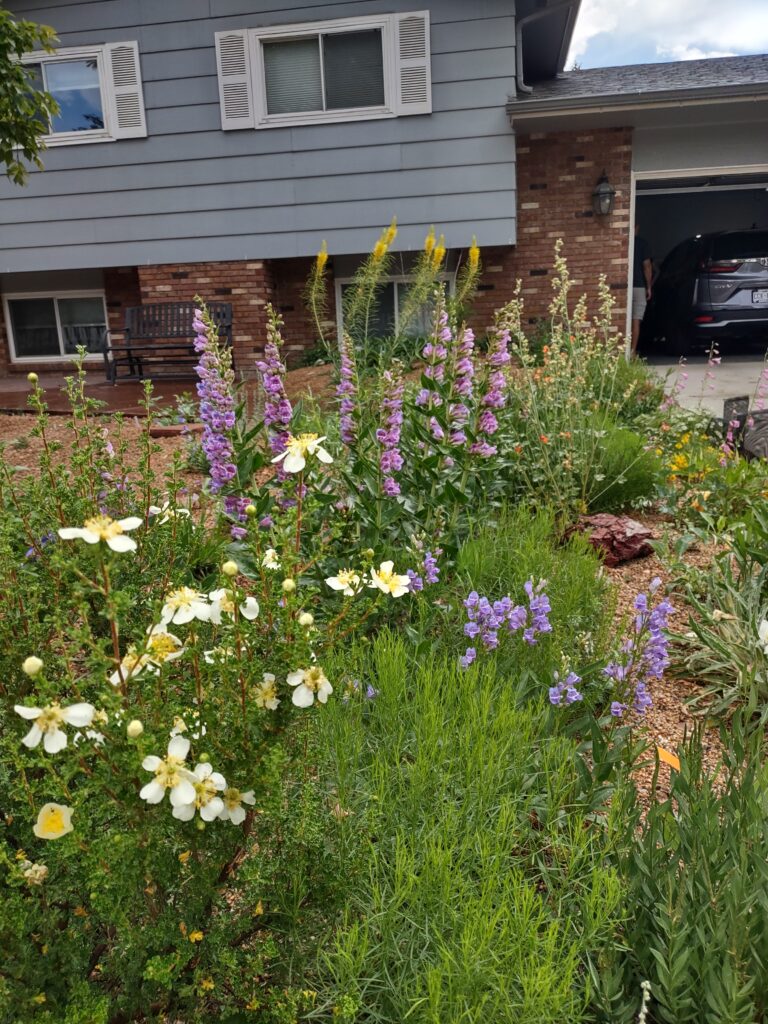
- Stanleya pinnata (prince’s plume) and Penstemon grandiflorus (large flowered penstemon) in the spring
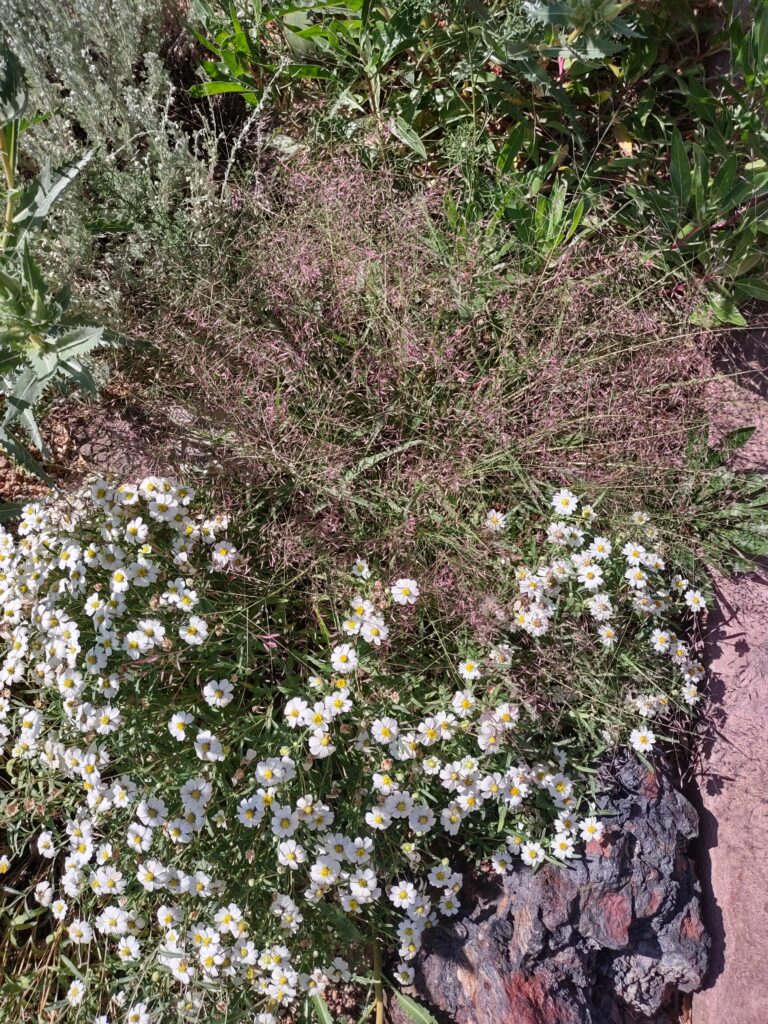
- Eragrostis spectabilis (purple lovegrass) and Melampodium leucanthum (blackfoot daisy) in mid summer
- Schizachyrium scoparium (little bluestem) and Agastache rupestris (licorice mint hyssop) in the fall (admittedly, this last one I saw at DBG and I’m working to incorporate it).
- For a cooler spot, I love apple trees , elderberry, snowberry shrubs, rosa woodsii, alpine strawberries and columbine.
- For a sunny spot, I love Pinon Pine, Silver Sage, Goldenrod, Rocky Mountain Penstemon and buffalo grass.”
“I like color combinations of orange and purple or red and purple. Sphaeralcea munroana (Munro’s globemallow) with Penstemon glaber var alpinus (alpine sawsepal penstemon) provides a striking contrast in color, as does Penstemon eatonii (firecracker penstemon)and Penstemon grandiflora (large-flowered beardtongue).
I love the look of the taller penstemons in the same garden: Penstemons digitalis (foxglove beartongue), clutei (sunset crater beardtongue), palmeri (Palmer’s penstemon) and virgatus (wandbloom penstemon). They are of the same genus, but the leaves and blooms vary in texture, color and shape.
I’ve come to appreciate how well Carex brevior (plains oval sedge) fills in space in the garden.“
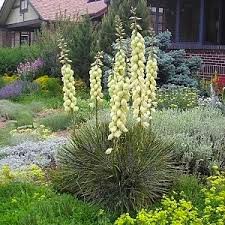
“My favorite combos are anything “low-moundy” with “tall-spikey.” Yucca, Agave or Nolina surrounded by Eriogonum, spreading, low Erigeron, or even baby blue rabbitbrush. Like fireworks resting in puffy clouds!”
If you have other native plant favorite combinations you’d like to tell us about, we can do another article! Please send to: [email protected]
*Deb is President of the Colorado chapter of Wild Ones, the Front Range chapter, and is a passionate native plant gardener.