Linum lewisii
By Karen Vanderwall
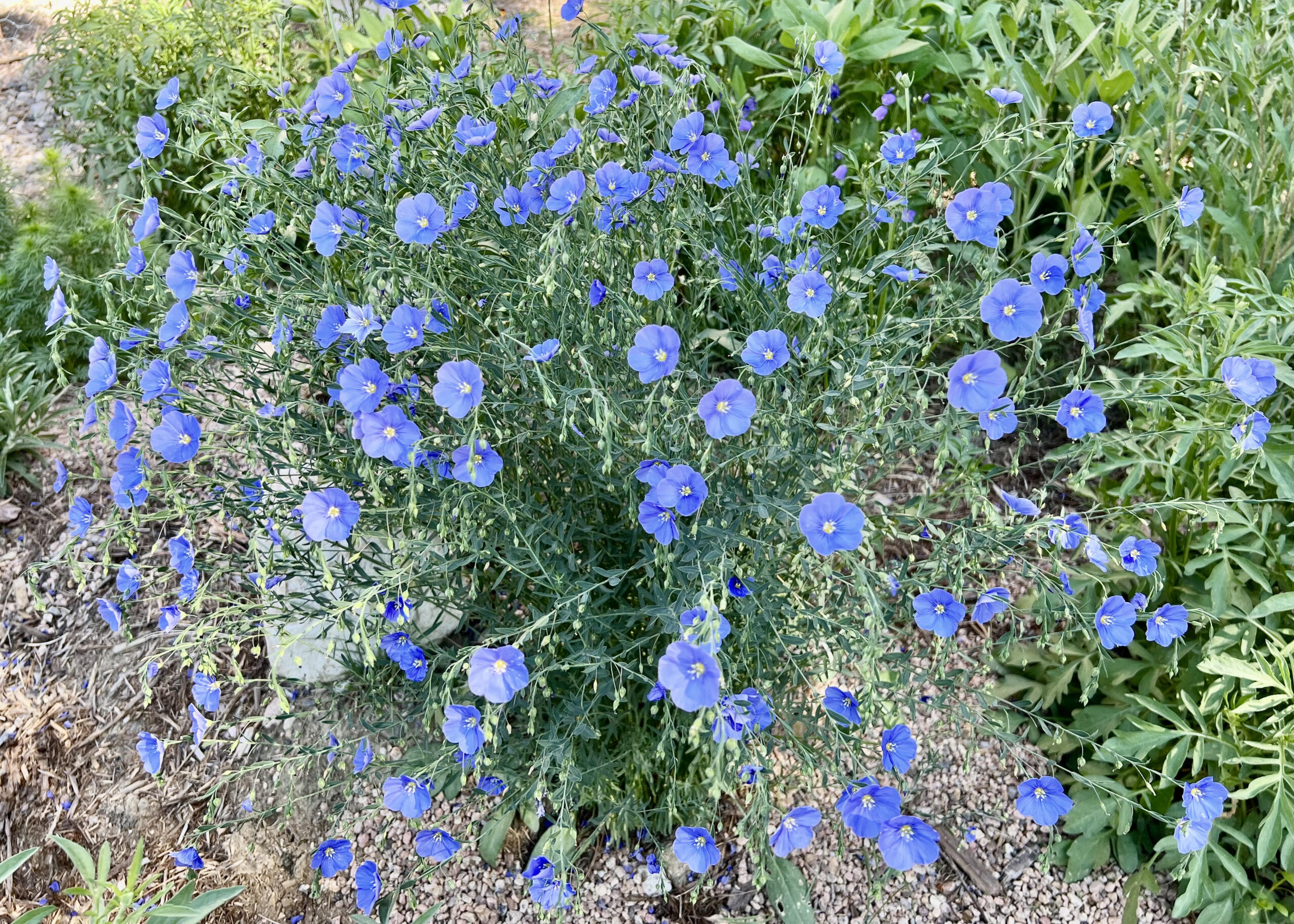
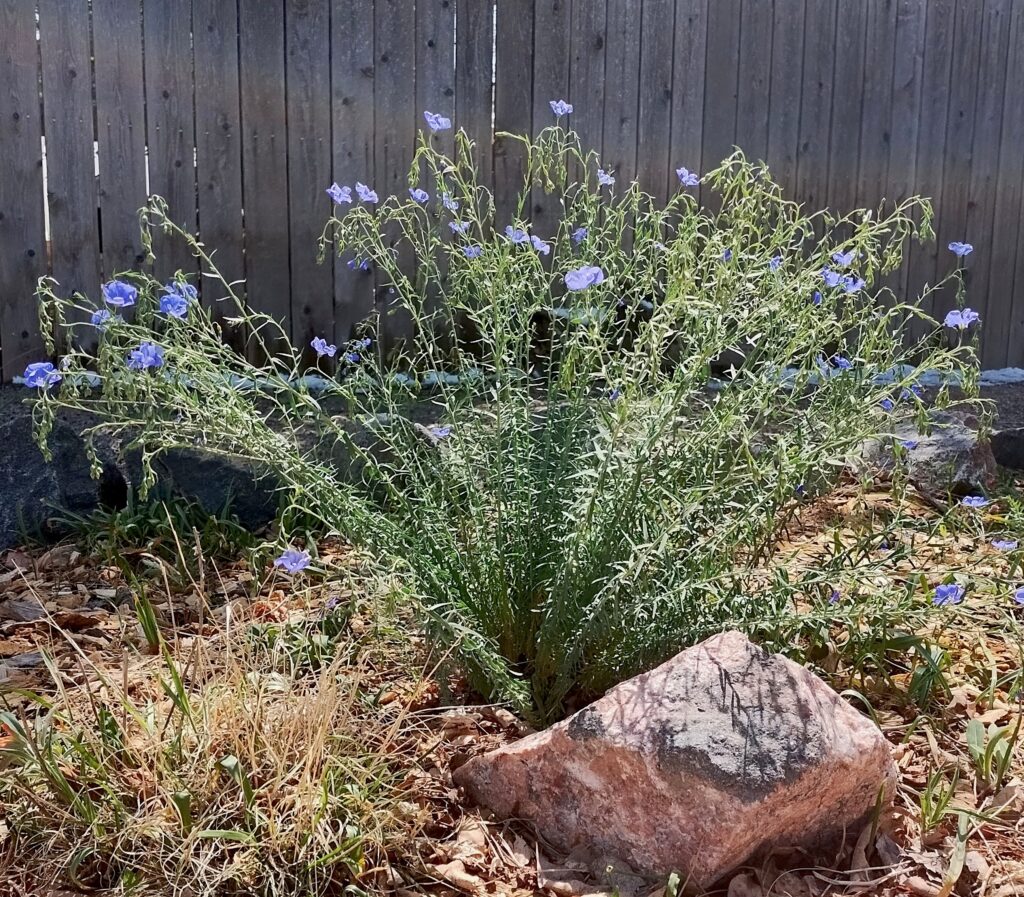
With their many electric periwinkle blue flowers, blooming prolifically from late spring through summer, blue flax (Linum lewisii) is a native garden must have. Blue flexor Lewis flax can be described as dainty or airy or even delicate; its stems coming together into a vase shape with spaced small narrow leaves. But don’t let its appearance fool you – it is very tough. Tolerating poor soil and low moisture, blue flax is incredibly easy to grow. Although technically a short-lived perennial, lasting only 2 to 3 years, it readily re-seeds itself, becoming a long-term member of the garden.
I have read many times about and written the name of the species lewisii without a thought. Interestingly, the species is named after Meriwether Lewis of Lewis and Clark. Apparently, he came upon the species along the upper Missouri River as his expedition approached the Rocky Mountains in Montana. Lewis was interested in this newly found flax plant for its potential as a useful agricultural crop in the way the European flax Linum usitatissimum had become. The European flax was introduced from Europe and was fully cultivated by the 1600’s for making linen textiles and linseed oil. Although, Native Americans used Linum lewisii for cordage, it is considered a low quality fiber compared to the European variety for the commercial market.
In Colorado, as written in a previous Wild Ones Front Range (WOFR) newsletter, prior to development, the high plains corridor that intersects with the Front Range of the Rockies was a short grass prairie ecosystem. Grasses dominated, but a few perennials were common including blue flax, (Linum lewisii). This is one of our WOFR president’s personal favorites. She cautions “once you have a few, you will have quite a few; it is a prolific re-seeder.” But adds, “its flowers are such a beautiful color – a luminous blue, and so happy in my garden.” It is also on the Wild Ones Front Range list of “Hardiest of Hardy Plants for Colorado’s Front Range” by Deb Lebow, Kenton Seth and Bob Nold.
Blue flax is known by several names such as Lewis flax, prairie flax, Western blue flax and wild blue flax. This lovely garden addition reaches 2 to 3 feet high and 1 foot wide. It is native to Western North America from Alaska south to northern Mexico and east to the Mississippi River. Blue flax blooms from late spring to mid-summer. Alas, the beautiful rotate, or wheel-shaped, blue flowers only last one day each, opening typically at sunrise and losing its petals by afternoon. But there are many more blossoms opening each day, continuously blooming from spring into summer. Its flowers have 5 petals reaching 1 to 1 1/2 inches in size.
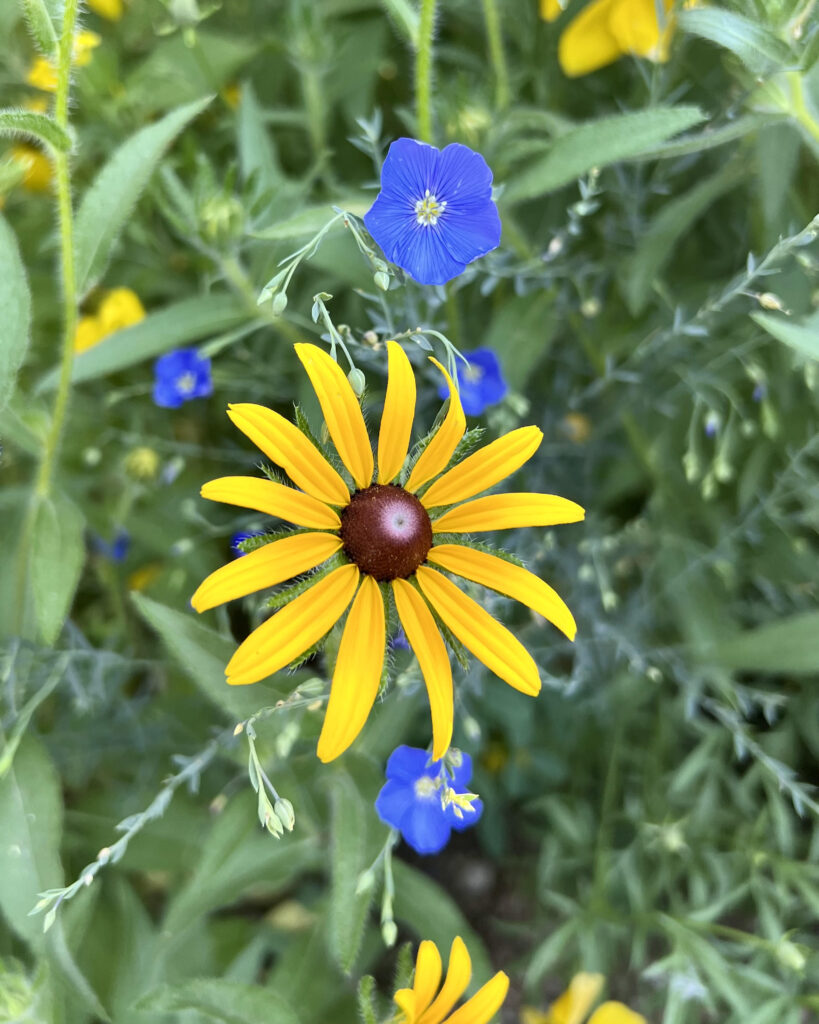
Blue flax is pollinated by flies, native bees, butterflies and other insects in Colorado. As a Colorado native flax, it supports native pollinators, which are crucial for the local ecosystem, including birds and wildlife, and biodiversity. An interesting note, when in your garden you can tell which insects are pollinators because they visit the same species whereas visitors will land on different plants possibly feeding on nectar but not assisting in pollination.
Direct sowing of the seeds of blue flax in late fall is the recommended method for growing success. They generate a deep tap root which is great for accessing moisture deep down in the soil but they do not tolerate transplanting well. Taproots are basically a single deep root on which they depend and they cannot easily or quickly grow another one. Lewis blue flax thrives in USDA hardiness zones 3-9. Seeds can be harvested from July-August and each seed head produces up to 10 seeds each! Conveniently, when allowed to dry well, seeds retain viability for several years.
There are roughly 200 species in the flax genera Linum. If purchasing a flax from your local nursery, be sure to buy the species lewisii as that is our native species here in Colorado. Linum perenne, also known as perennial flax, is sold in nurseries as well. Perennial flax was introduced from Europe as an ornamental plant. It is closely related to Lewis flax and looks very similar.
References
Colorado State University Extension, Jefferson County Colorado, Colorado Plant Data Base, Wild Blue Flax, Linum lewisii, 2026.
National Park Service, Cedar Breaks National Monument Utah, Blue Flax.
University of Texas at Austin, Lady Bird Johnson Wildflower Center, Plant Database, Linum lewisii.
USDA, Natural Resources Conservation Service, Plant Fact Sheet, Linum lewisii.
USDA, US Forest Service, Fire Effects Information System, Linum lewisii.
*Karen Vanderwall is on the Wild Ones Front Range Chapter Board of Directors. She gardens in Fort Collins, CO.