By Kevin Philip Williams, Manager of Horticulture, Denver Botanic Gardens.
Introduction (by Karen Vanderwall*)
There is a new cool native plant garden at the entrance of the CSU Arboretum! I was lucky enough to help install the garden last spring along with other Wild Ones volunteers.
As many of you gardeners already know, Denver Botanical Gardens (DBG) is a powerhouse of innovation with folks having expertise in horticulture, Colorado ecoregions, water wise planting, conservation, plant ecology, and of course garden design. One of those people is Kevin Williams. In coordination with CSU, Kevin designed and installed a native garden at the entrance to the CSU Arboretum that creatively connects the garden with the Arboretum and in full consideration of our foothills ecoregion. Native plants are used throughout, and the community helped to build it. Wild Ones involvement in helping with the garden began when our active Northern Wild Ones Regional Coordinators (RCs), Jen, Karen and Alora, attended a plant sale at CSU held by Dr. Daniel Burcham, Professor of Horticulture at CSU, and his students. He mentioned the native plant garden and the RC’s agreed to recruit volunteers for the installation.
As one of the volunteers, I can say it was a great way to spend a spring morning where I met new people and enjoyed being part of the creation of a new and different native plant garden!
By Kevin Williams
The Wild Companions Entrance Garden at the Colorado State University Heritage Arboretum offers a distinctly local shrubby palette as a living introduction to the Arboretum’s diverse woody collection. Rather than beginning with an imported horticultural idea of what an Arboretum entrance should be, the garden begins with the plants and ecological processes of the landscape immediately surrounding it.
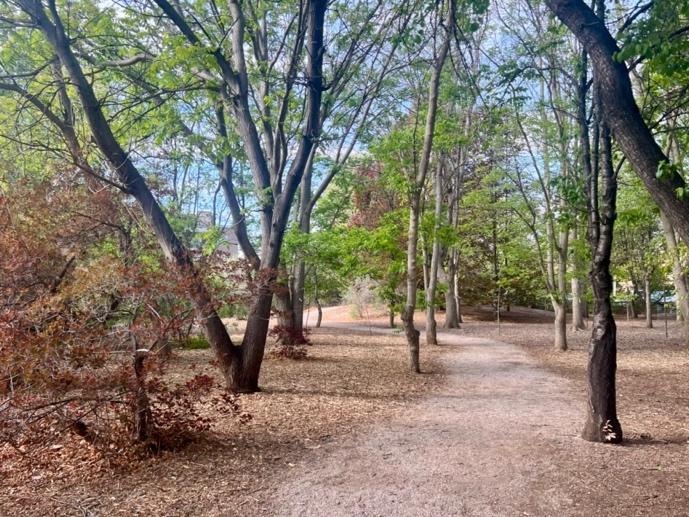
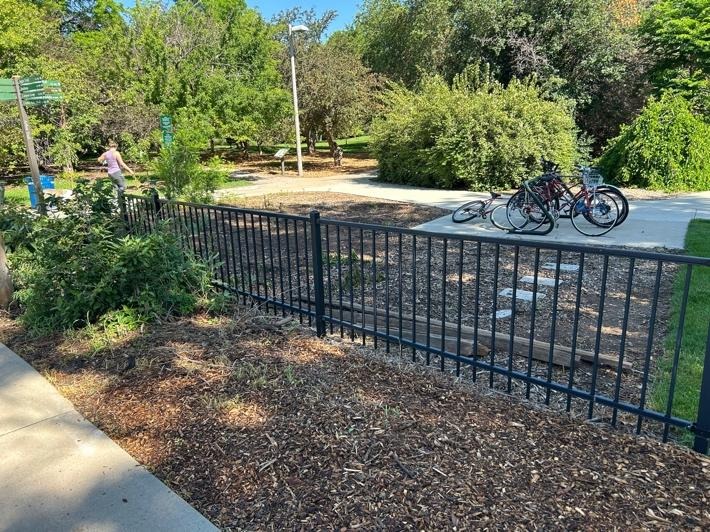
Built over several days in late-April of 2026 through a collaboration between Colorado State University and the Denver Botanic Gardens Sustainable Landscape Services, the garden brought together students and staff from CSU with volunteers from CSU Extension, Wild Ones Front Range, and Denver Botanic Gardens. The result is a planting shaped as much by collaboration and shared labor as by design.
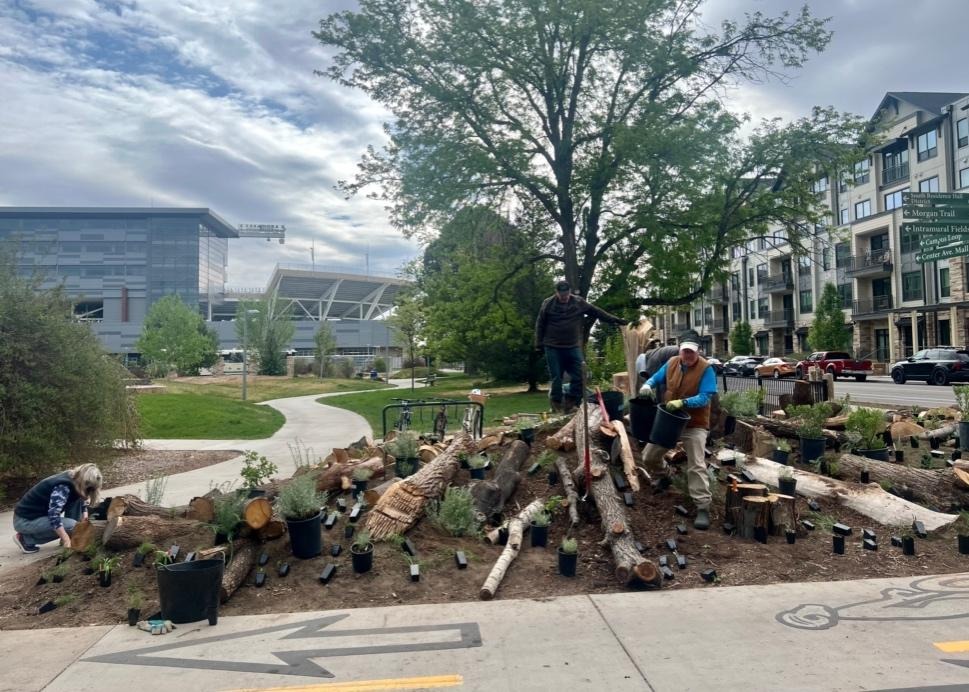
The garden places roughly sixty species of Larimer County native shrubs, grasses, and forbs within an imagined blowdown. At its center, The Fell is an artistic installation of several tons of campus salvaged deadwood, around which approximately 1,000 plants occupy 800 square feet. Tree cookie crevice gardens and expanded shale mulch complete the planting, creating a small landscape that imagines what might emerge when the forest suddenly opens to the sky.
The design draws heavily from the beauty and ecological complexity of regional shrublands, especially those that occur in the early seral environments created by disturbance in our foothills. Shrublands are particularly compelling models for Front Range gardens because they are facilitative spaces, supporting substantial ecological activity while often thriving in extremely harsh conditions. Shrubs provide shelter and habitat for plants and animals, offer persistent structure, and respond dynamically to browsing, pruning, fire, and other disturbances. They are often the overlooked members of woody plant collections and giving them this kind of stage at an Arboretum entrance felt particularly meaningful.
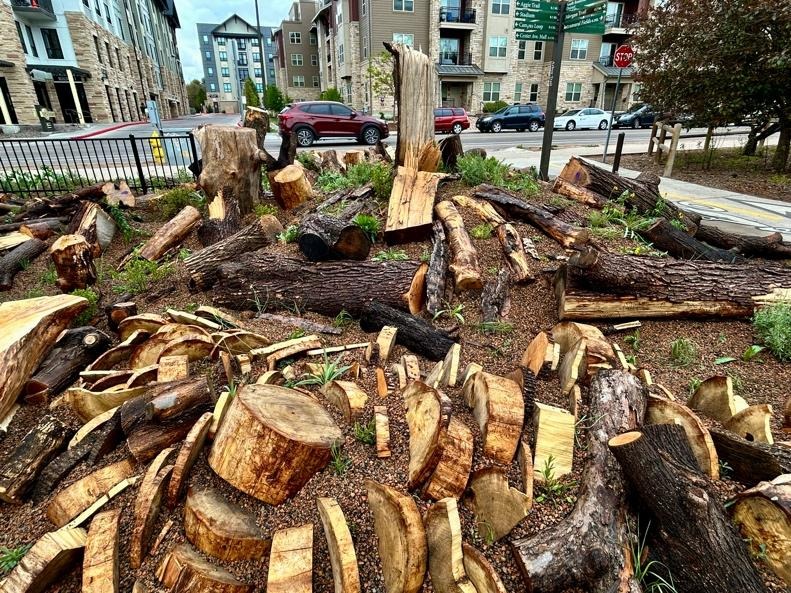
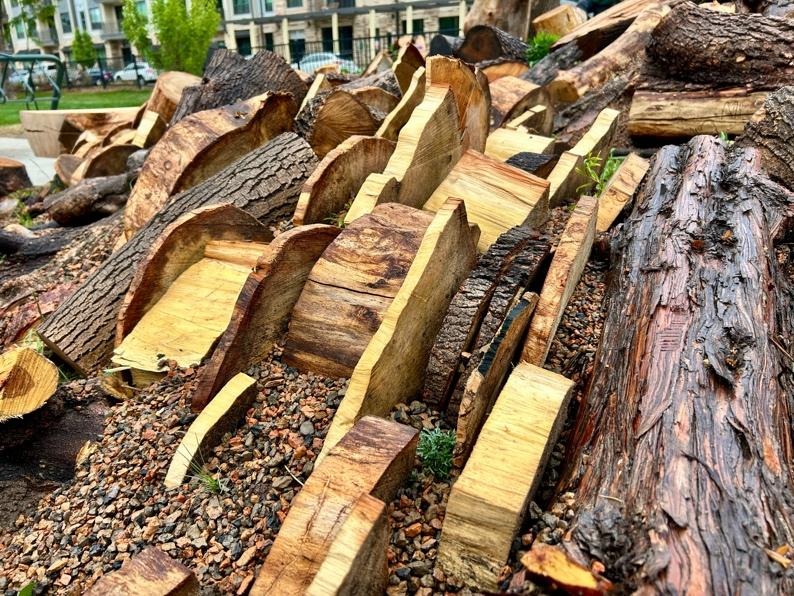
The decision to work with a hyperlocal palette was rooted in a desire to connect the ecology of the surrounding landscape with the Arboretum. Because of this specificity, many of the plants weren’t available through the nursery trade, and the majority were grown by Arboretum Director Daniel Burcham and his students at CSU greenhouses.
The planting is intended to change dramatically over time. In its early years, it should produce an explosion of herbaceous growth as grasses and forbs fill the spaces between the deadwood. This first flush will bring seasonal abundance and quickly occupy the site. Over time, the shrubs will begin to take hold, rising through that initial herbaceous layer and establishing a more permanent woody framework. Eventually, they will become the structure that anchors the Arboretum entrance in native woody plant material.
The deadwood from The Fell is an equally important and ever-shifting part of this palette. Rather than treating fallen trees as waste, the project uses them as ecological infrastructure. Downed wood provides shelter, shade, cavities, crevices, and overwintering habitat while offering surfaces for fungi, lichens, insects, and microorganisms. As it slowly decomposes, it becomes habitat, food, and eventually soil, supporting increasingly complex relationships as it gives itself back to the landscape. In our semi-arid environment, where decomposition happens slowly, that process may unfold over decades.
The design of Wild Companions was highly spontaneous, and a traditional planting plan was never drawn up. The process was rooted in gardening and actively responded to the plants and materials available at the time of installation, with the deadwood itself determining planting pockets, circulation, scale, and composition as the work progressed. The garden emerged through a process of arranging, rearranging, planting, moving, and looking again. To quote Andrew Savage in the Teenage Cool Kids’ song Volvo to a Kiss, “It ain’t rock music if you’re not hauling shit around.”
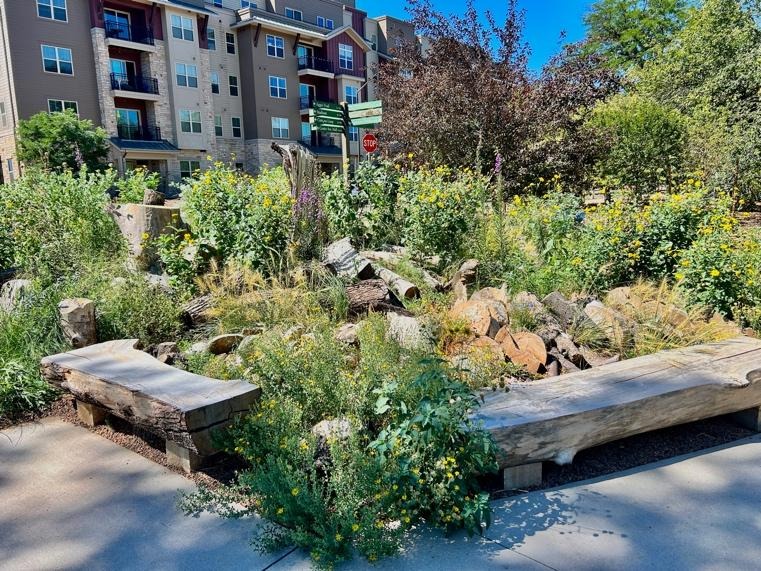
Wild Companions is not intended as a static representation of a native plant community. It’s a garden in motion, built around disturbance, decay, growth, and succession. Not every species on the aspirational plant list was available during the first season, and the planting will continue to develop as additional material can be propagated or sourced. Future additions will respond both to the original intent of the design and to the needs and opportunities the garden itself reveals. What began as a disturbance will, over time, become something else entirely.
See the aspirational plant list here: https://colostate-my.sharepoint.com/:b:/g/personal/dburcham_colostate_edu/IQAXx0l4IjBQQY294Go4P_OZAaUdMvyz3nq5IBbXRikNje0?e=lLs7JO
*Karen Vanderwall is a member of the Board of Directors of Wild Ones Front Range Chapter, and active with our Northern Region.