By Karen Vanderwall
By the end of August, native plant gardeners sigh and can enjoy the fruits of their labor – beautiful blooms, numerous species of bees, hummingbirds, perhaps fluttering monarchs and feeling the joy, the pride of a successful gardening season. But wait – the season isn’t over yet!
Native fall-blooming plants and shrubs are so important for Colorado gardens! They provide the essential late-season food for migrating and local pollinators when everything else has finished up. They basically bridge an important gap in ecosystems supporting all different wildlife in our region. We are talking nectar for bees and butterflies including migrating species that are preparing for winter. Luckily, native plants adapted for our region will hold up to the unpredictable frosts, moisture and soil temperatures of Colorado.
So, what are some of these important plants, the super stars of an autumn native plant garden? Check out the list below. You can plant starter plants in spring, more mature plants in late spring if given some water, or plants and seeds in fall.
Grasses
Fun fact: Have you ever heard of grass skippers? They are skipper butterflies whose larvae mostly eat grasses. Usually shades of orange and brown, they lay their eggs on their host plants, which the hatched caterpillars feed on. The adults drink nectar from flowers during the day. This butterfly species provides a good example of why mixing grasses with flowering plants in your native garden is important. Below are more good examples:
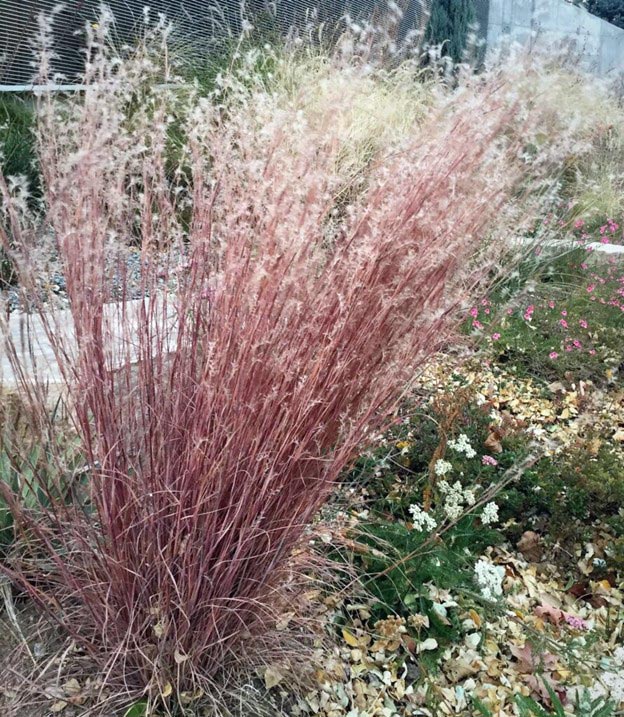
Little Bluestem Grass (Schizachyrium scoparium):
- Provides important ecological value from seed heads that feed small song birds, shelter and microhabitats for overwintering insects, including bees.
- An attractive native grass that turns a striking copper-red color in the fall.
- Offers wonderful structural winter interest.
- It serves as a larval host for nine skipper species including the common wood nymph (Cercyonis pegala), Dakota skipper (Hesperia dacotae), Leonard’s skipper (Hesparia leonardus) and others.
- 1-3 feet tall, grows in bunches.
(See the Xerces Society for Invertebrate Conservation, Little Bluestem)
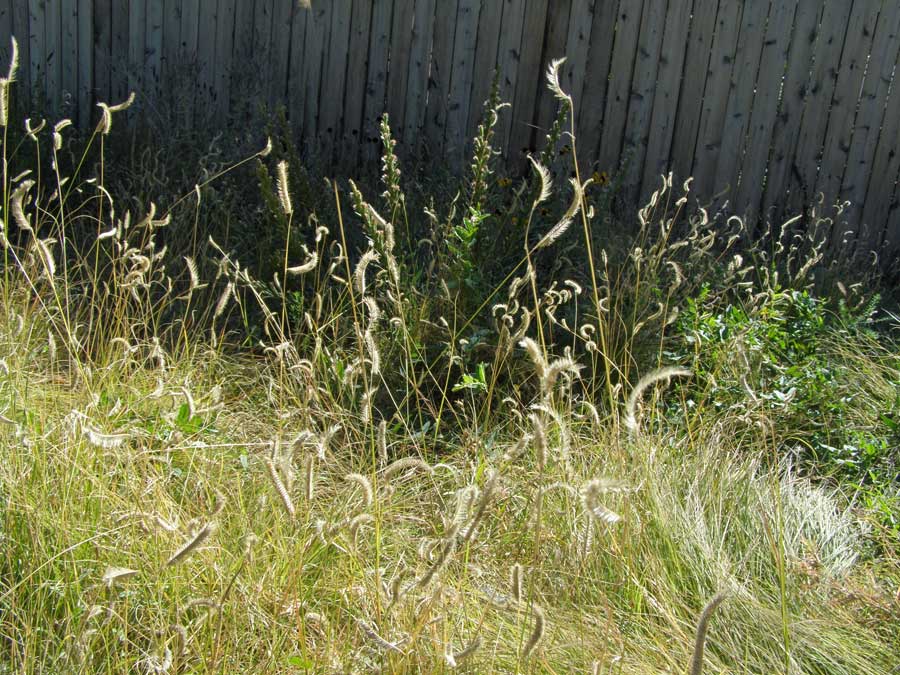
Blue Grama Grass (Bouteloua gracilis):
- Colorado’s state grass.
- At 12-14 inches in full flower, it provides a nice height contrast in the garden.
- Turns a warm light golden color while keeping its unique eyelash seed heads well into the fall.
- Also, a larval host to several grass skipper butterflies.
Flowering Plants
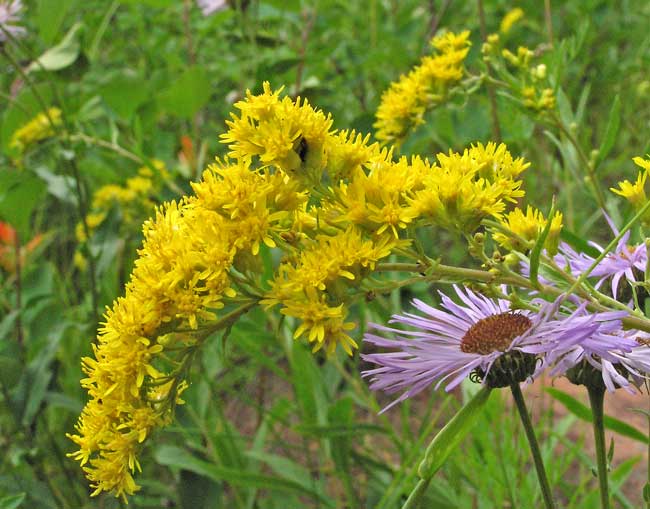
Goldenrod (Solidago):
- WOW! According to Doug Tallamy, author, backyard transformation pioneer, professor of entomology at the University of Delaware, goldenrod serves as a host to 79 butterfly and moth species of caterpillar.
- Lovely color contrast to purple asters in the fall.
- Spreads by seed and by underground rhizomes.
- Can survive well up to 7,000 feet in elevation.
- Is drought tolerant, once established.
- Prefers full sun but will tolerate partial shade and grows between 12 and 36 inches tall.
- Species native to the Front Range include Solidago missouriensis, Solidago nana, Solidago rigida and more.
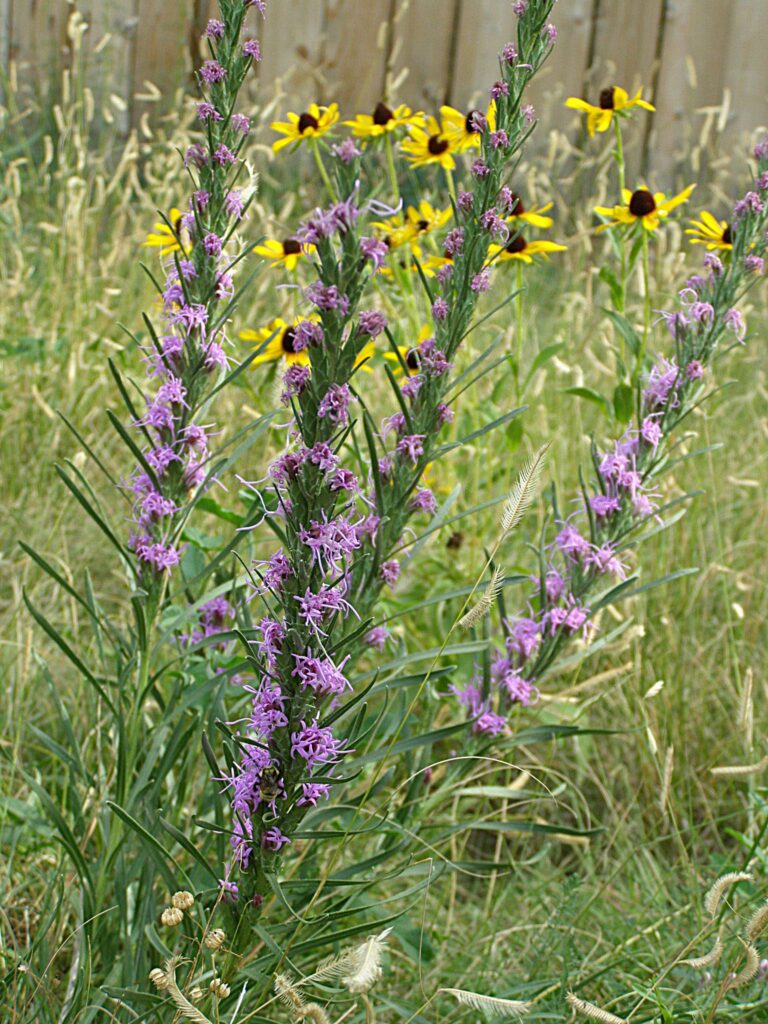
Dotted Blazing Star (Liatris punctata):
- Thrives in dry, sunny soils with deep taproots.
- Can spread by seed and rhizome.
- Provides late-season fuzzy purple flower spikes that attract local and migrating pollinators, including the Pawnee mountain skipper (Hesperia leonardus montanta).
- Grows up to 24 inches high.
Smooth Blue Aster (Symphyotrichum laeve):
- Displays violet-blue flowers with yellow centers that bloom late into the season, providing crucial late-season nectar for pollinators.
- Tolerates a wide variety of garden conditions, from sun to part shade and a range of soils and moisture levels.
- Grows 1.5-3 feet high.
- Spreads by seed and rhizome.
Shrubs
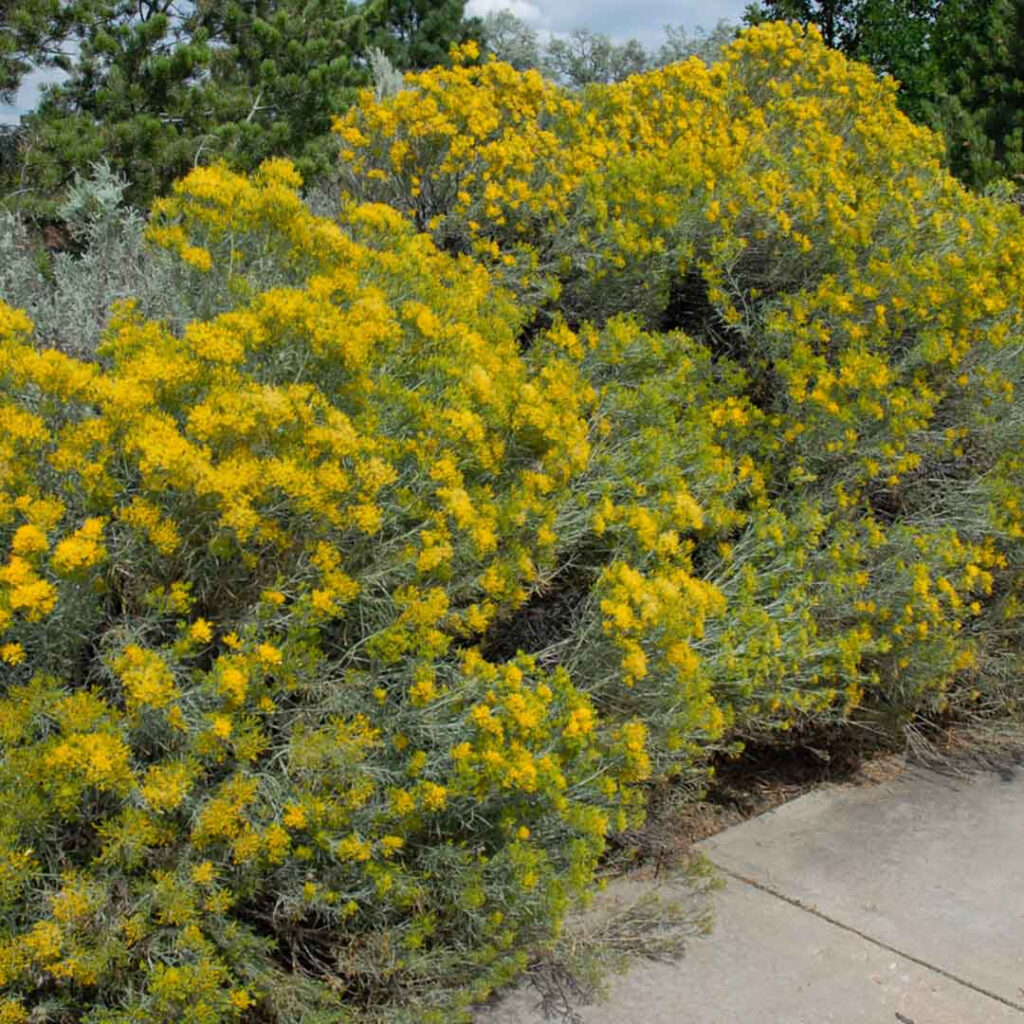
Rubber Rabbitbrush (Ericameria nauseosa):
- In the Aster family.
- Common to see in the Front Range, rabbitbrush bursts with bright yellow blooms just as other summer flowers fade.
- Extremely drought tolerant with deep roots.
- A vital late food source for bees and butterflies.
- Grows 2-7 feet high.
Note: Check out the fact sheet rabbitbrush on the website and the article on the dwarf species in the blog. from the Wild Ones Newsletter Plant Spotlight in our blog.
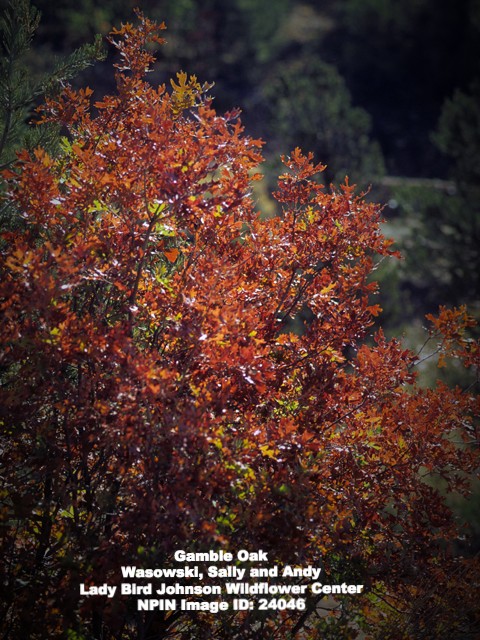
Gambel Oak (Quercus gambelii):
- Commonly known as scrub oak, leaves turn a deep russet to brown golden color in fall.
- Important keystone shrub providing vital acorns and shelter for wildlife and host plant to our state butterfly, the Colorado hairstreak (Hypaurotis crysalus).
- A large shrub reaching 10- 20 feet in height.
Saskatoon Serviceberry (Amelanchier alnifolia):
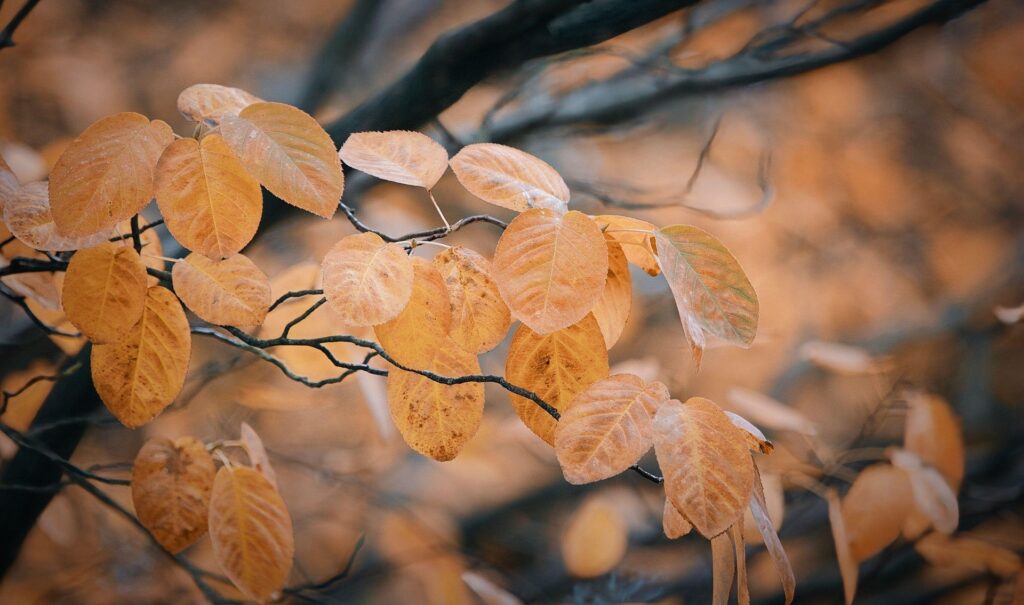
- Bright gold to deep red and orange leaves in the fall.
- Although an early bloomer and berries ripen by early summer, remaining dry or late producing fruit provide a good transitional food course into early fall.
- Leaf litter provides shelter for invertebrates like moth pupae or decomposers like millipedes.
- Grows 5-20 feet in height.
Apache Plume (Fallugia paradoxa):
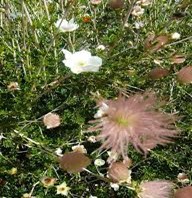
- A very showy shrub!
- Deciduous to semi-evergreen shrub with peeling bark displaying 2-inch white flowers that transition into feathery, long-lasting pink-to-purple wispy seed tails through autumn (the plumes!).
- Likes full sun and hardy to negative 30 degrees Fahrenheit.
- Blooms in spring and sometimes again in the fall offering wildlife late season nectar and dense branching provides shelter.
- Very drought tolerant once established.
- Hails from southwestern/south central Colorado.
- Grows 3-6 feet in height.
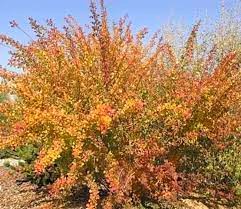
Three Leaf Sumac (Rhus trilobata):
- Also known as skunkbush.
- Leaves turn red-orange in the fall.
- Produces red clusters of fruit that persist into fall feeding resident and migratory birds, and small mammals.
- Multi-stem growth habit provides excellent cover for resident and migratory birds and other wildlife.
- Tough and drought tolerant.
- Grows 2-6 feet in height.
There are many other fall highlights for your Colorado native plant garden. These are just a few easy to find Colorado native plants. Extend your bloom times, and I guarantee, not only will butterflies, moths and invertebrates be happier with your garden, but you will be too!
Karen Vanderwall hails from Fort Collins, is on the Board of Directors for Wild Ones Front Range Chapter and is an avid Colorado native plant gardener.