By Deborah Lebow Aal
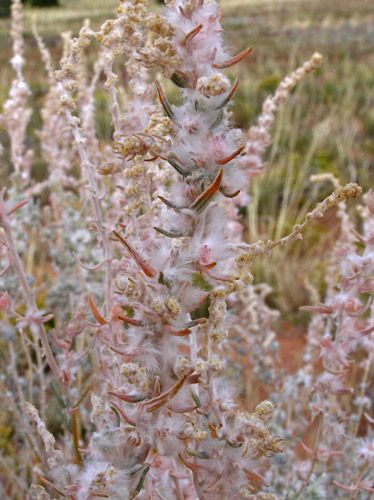
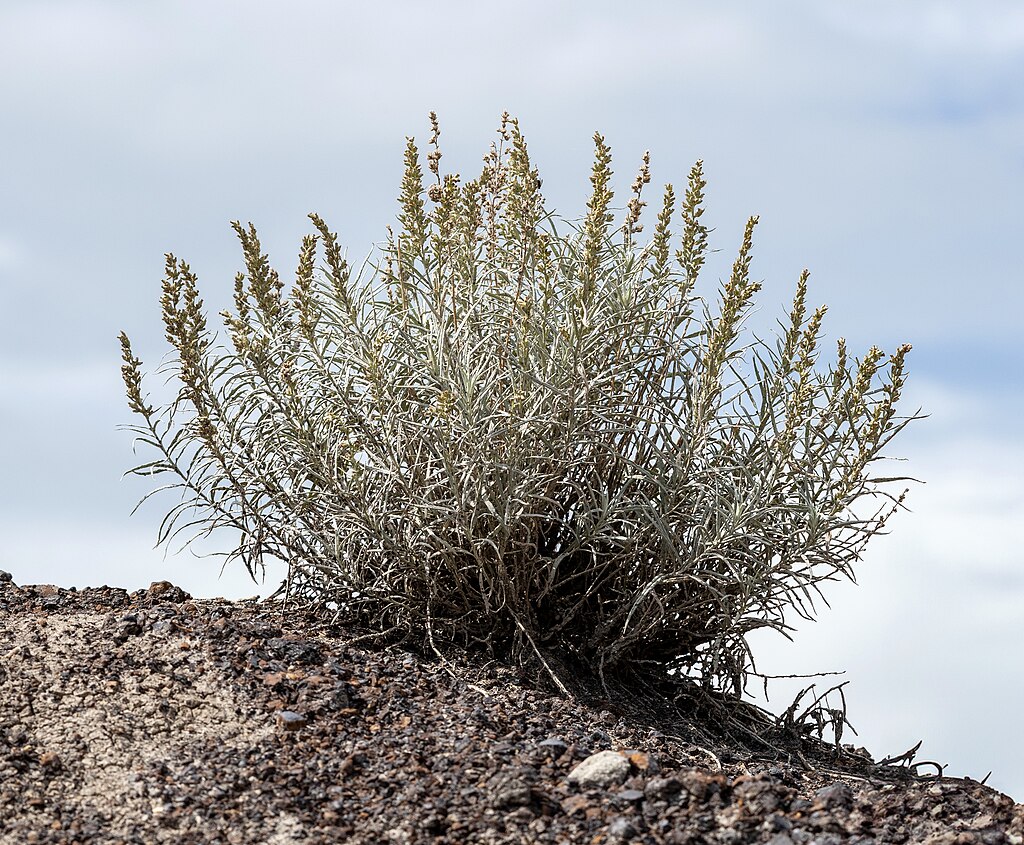
Yes, I am going to write about the pounds you put on this winter (wait, did we have winter?). No, I am not. Winterfat, Ceratoides lanata or Krascheninnikovia lanata, also known as white sage, lamb’s tail, and sweet or winter sage, is an underused native plant in Colorado gardens. I recently saw it planted with grasses at Denver Botanic Garden’s Laura Smith Porter Plains Garden, and was impressed with how beautifully it contrasted with the grasses, planted in strips for visual interest. Why is it not used more? Maybe the name is off-putting?
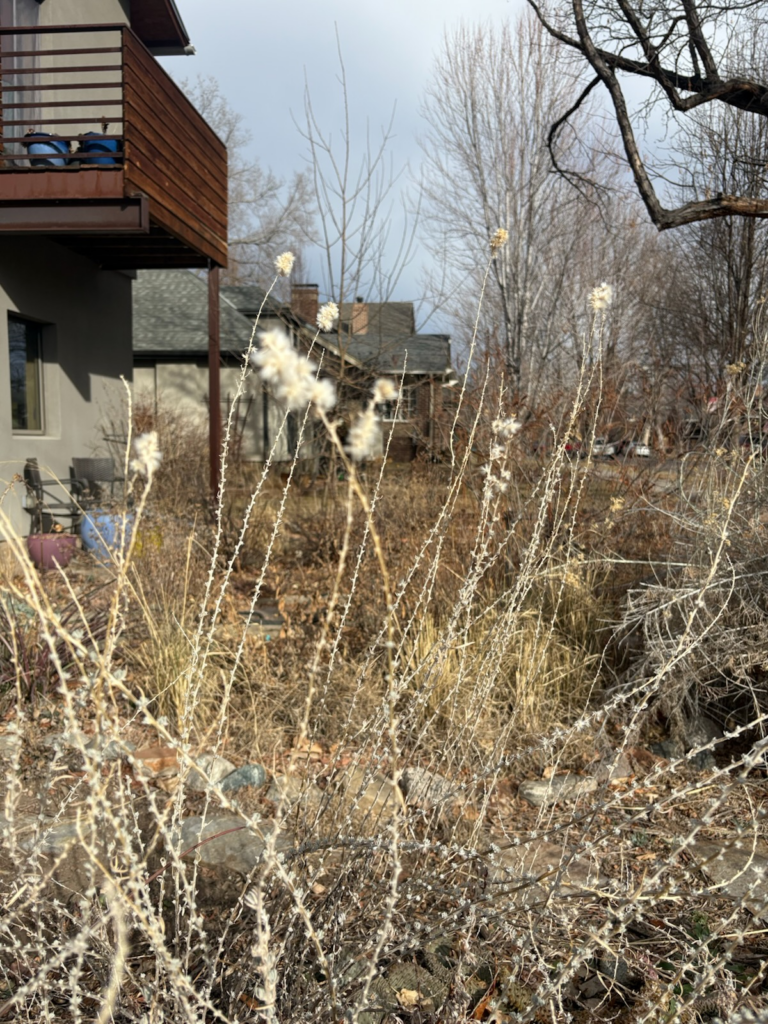
It probably isn’t used much because it’s not showy. It doesn’t have a gorgeous bloom. But those little puffs of white in the winter landscape are show stoppers! I can’t tell you how many people ask me what that plant is. It is a low-spreading plant, important for wildlife. The protein content of winterfat is close to alfalfa, making it a valuable forage plant. And granted, not many of us have mule deer, cattle, or bighorn sheep roaming our gardens, but this native plant has other ecosystem values as well. It attracts ground-dwelling birds and a variety of small mammals. It is extremely hardy, remarkably drought-tolerant, and does not need fertilization.
It grows from grassland plains to rain-shadow faces of montane locations, and likes it dry and sunny. Think about it for future naturalized gardens. You can get seeds from most native seed companies, e.g., Western Native Seed or Pawnee Buttes Seed Inc. Or look for it at our next Wild Ones plant swaps!