
The absolute key to getting the public (including our spouses, municipalities, and skeptical neighbors) to accept and appreciate ecological landscaping by Kenton Seth
Colleagues and mentors have all made passing comments—usually in the parking lot after a breakfast meetup, or later at night after a few glasses of wine—that there is a trick to making landscape designs legible and acceptable to everyone. And by “design,” we don’t mean architecture, we mean design is any landscape choice. For example, a design choice is a decision for fence pickets at the big box store or where we plant the last impulse purchase we brought home from a Wild Ones plant swap.
I thank my pollinator-obsessed and research-junkie friend Beth Lewis for introducing me to the term “Cues to Care.” Frankly, I find it a little clunky, even abbreviated CTC, but it’s an important concept. Joan Nassauer (School for Environment and Sustainability, University of Michigan) coined the term in 1988, to define what the visual cues are in a landscape that it is cared for or, rather, domesticated. This can include fences, mowed paths, sculptures, bird baths, clean sidewalks and “This is a Pollinator Garden” signs. All these elements tell us that a place receives intentional care. The cues answer the question: How does a person know if a place is supposed to be that way?
As any member of Wild Ones knows well, this idea is increasingly important as city aesthetics grow more homogeneous and sterile and the need for urban habitat ever more critical.
Yes, we can use a sign, but more powerful cues are subconscious. Eco-designers can understand that all of humanity looks at landscapes through an emotional lens. The public is a user of space but more importantly, in terms of adopting eco-design, the public pays for it and has more power over it than the humble ants and butterflies. I find this to be true through the living experiment of being a career garden designer. If we can provide positive emotions from landscapes, then everyone becomes much more generous and willing to help the environment. A cared for landscape becomes a win-win situation.
Nassauer quite thoroughly identifies and categorizes all the Cues to Care. I’ll call them 37 “species” of cues, if you will. They include things like “crisp edges,” “no litter/trash,” “seating” and “mown lawn.” With the gift of her definitions and zooming out to the bigger picture, I have realized two major things about cues to care that you and I can use.
That all the cues, like species, can be treated taxonomically and we can look up the family tree to see the bigger emotional (or human evolutionary) themes behind every cue. These are the internal reasons we want these things.
I first started looking at cues as ways to care for humans. Perhaps some will be familiar with internet jokes about how we, for our mental health, can think of our homes as if we’re zoo animals: “Throw the enrichment ball back into my enclosure!” I think people feel safer in the right place and even enriched, when we encounter the cues.
The second realization was that the cues can be transactional, which is pivotal for our work going forward. I find that if I have a very traditional client and I provide for them a little patch of lawn off the porch near the barbeque, where the kids and dog can play under a nice shade tree—an inviting patch of green carpet with a nice crisp edge—then they are much more likely to let me plant a messy pollinator meadow in the corner or a shaggy native shrub to feed the birds or even wilder things like dead logs for habitat.
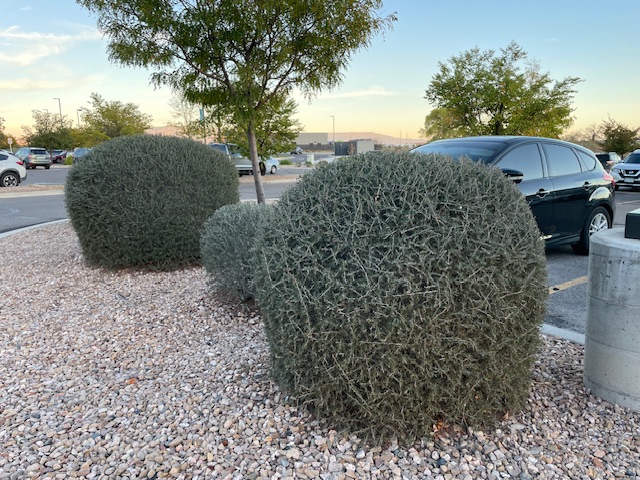
Even if, often “what looks good may not be good (for the environment), and what is good may not look good” (Nassauer, 1995), we can balance both. We are also able to find the big area where human and environmental needs overlap. So let’s focus most on those. Understanding cues to care is powerful. I challenge you to think about them the next time you are hiking in an open space and come to the old farm that was once there. Or when you are stuck in traffic where your eyes can wander onto some landscaping. Ask yourself: “What are its cues to care?I’ll be speaking more deeply about Cues to Care on March 6 in Longmont at the Create Beauty conference, alongside one of the UK’s most well-known habitat-garden educators, John Little. I think Colorado has a great deal to learn from him and European success stories of urban habitat providing crucial biodiversity. Frankly, friends, I think Europe is a few steps ahead of us in this field. It’s time to catch up and make our own vanguard!